Supply chains rarely run exactly as planned. A delayed shipment, missing inventory, slow procurement process, or lack of communication between teams can quickly affect the rest of the business. When information sits across different systems, it becomes harder to identify these issues early and respond to them.
This is where ERP supply chain management can make a difference. By bringing key operational activities into one connected system, businesses can access reliable information, coordinate processes, and respond to disruptions more effectively.
What Is ERP in Supply Chain Management?
This refers to using an enterprise resource planning system to connect and manage different supply chain functions through a central platform. Instead of relying on separate tools for purchasing, inventory, sales, and financial information, teams can work with data from a shared system.
This gives businesses a clear view of what is happening across their operations. For example, purchasing teams can check inventory levels before placing orders, while managers can track orders and deliveries without relying on multiple spreadsheets or manual updates.
How ERP Helps Reduce Delays
Delays often happen because information does not reach the right person at the right time. A supplier may be late, inventory may run low, or an order may remain pending without the relevant team knowing about it.
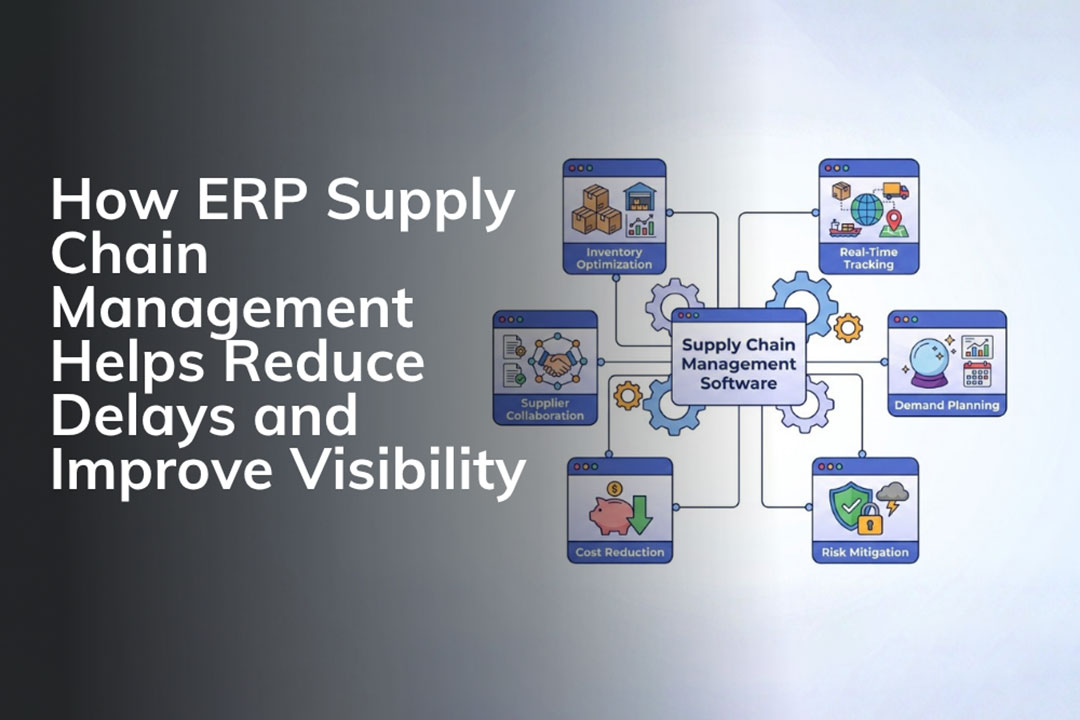
This system helps reduce these gaps by connecting operational workflows. Teams can track purchase orders, inventory levels, supplier information, and sales activity from one place. When something changes, the relevant information is easier to access and act on.
Automation also reduces time spent on repetitive administrative tasks. Instead of manually entering or transferring data between systems, employees can focus on resolving issues and keep operations moving.
Improving Visibility Across the Supply Chain
Visibility is one of the key benefits of ERP in supply chain management. Businesses need to know what stock is available, what has been ordered, what is being delivered, and where potential bottlenecks may occur.
With centralised data, managers can get a more complete picture of operational activity. This makes it easier to identify stock shortages, monitor supplier performance, and spot delays before they have a larger impact on customers or operations.
Better visibility also supports more informed planning. Businesses can use current data to adjust purchasing decisions, manage inventory more effectively, and prepare for demand changes.
The Role of ERP in Procurement
Procurement is closely connected to inventory, finances, and supplier management. When these functions operate separately, purchasing decisions can slow down and become harder to track.
Using procurement software within an integrated business allows businesses to manage purchasing activities alongside other operational data. Teams can monitor purchase requests, orders, suppliers, and related costs without constantly switching between platforms.
This connected approach can also help prevent unnecessary purchases. When purchasing teams have access to current inventory information, they can make decisions based on actual stock levels rather than outdated records.
ERP Supply Chain Management in Pakistan
For businesses operating in Pakistan, managing logistics and operations efficiently is especially important as companies deal with changing demand, supplier availability, transportation challenges, and growing operational requirements.
SCM ERP Pakistan solutions can help businesses bring these activities together while giving teams better control over day-to-day operations. Instead of relying heavily on manual processes, businesses can use connected data to improve coordination and respond to supply chain issues faster.
A More Connected Approach to Supply Chain Management
The value of an integrated business platform goes beyond simply replacing spreadsheets or individual software tools. It connects information across departments so that teams can work from the same data and make decisions with greater confidence.
For businesses looking to reduce delays and improve visibility, a centralized system provides a more structured way to manage supply chain operations. By connecting procurement, inventory, sales, and financial processes, it helps businesses identify problems earlier, improve coordination, and keep operations moving.
FAQs
Q1: What is ERP in supply chain management?
A: ERP in supply chain management uses a central platform to connect functions such as procurement, inventory, sales, and finance. This lets teams access consistent information and coordinate operations more effectively.
Q2: How does ERP improve procurement?
A: The system connects procurement with inventory and financial data, helping teams track purchases, monitor suppliers, and make purchasing decisions based on current business requirements.
Q3: How does ERP help reduce delays?
A: An integrated platform connects operational workflows and provides teams with timely information about orders, inventory, suppliers, and deliveries. This makes it easier to identify bottlenecks and address issues before they cause major delays.
Q4: What are the benefits of ERP in supply chain management?
A: The main benefits include better visibility, streamlined processes, improved inventory management, reduced manual work, and faster decision-making.