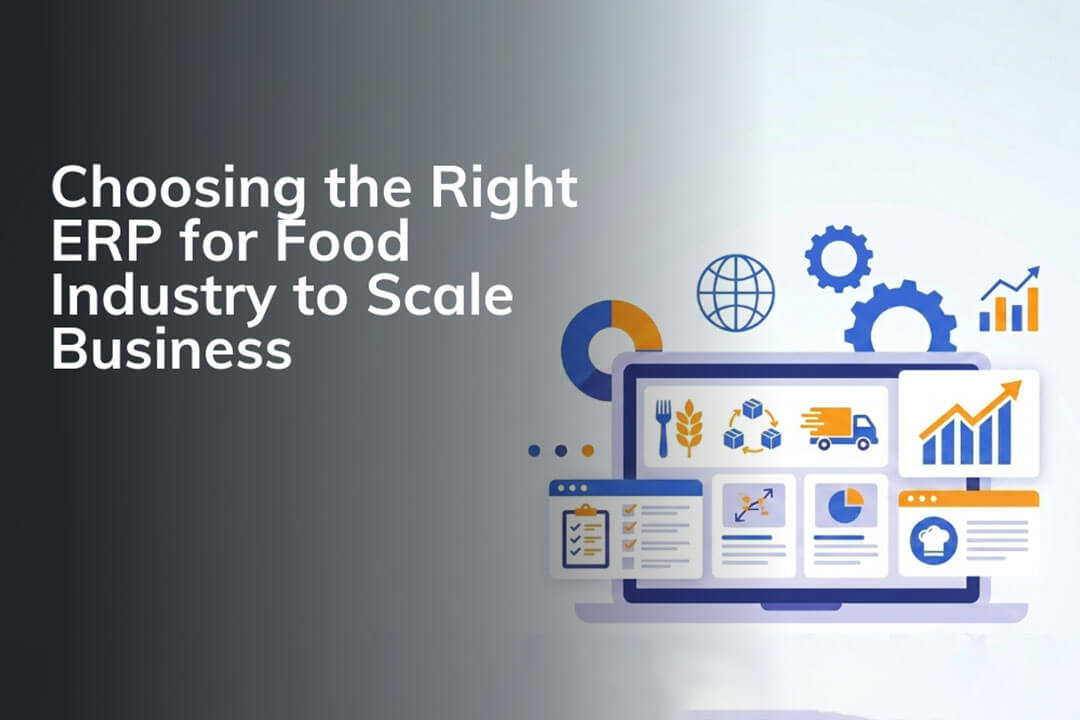
Choosing the right ERP for food industry is not just a system decision, it directly impacts how your business performs every day. As operations grow, managing inventory, production, suppliers, and costs becomes harder to control. Small gaps in data or delays in reporting can quickly turn into bigger financial losses.
At the same time, food businesses deal with strict regulations, changing ingredient prices, and constant pressure to maintain quality. Without a connected system, teams work in silos and decisions lack clarity.
However, the right ERP brings structure to your operations. It connects every function, gives real-time visibility, and helps you make informed decisions. As a result, you gain control, reduce waste, and create a clear path for steady growth.
What is ERP for the Food Industry and Why It Matters
An ERP for food industry connects your finance, inventory, production, and workforce in one system. It keeps everything in sync, so you always know what is happening.
Without it, problems show up quietly. Costs increase, stock runs out, and teams work without clear direction. As a result, decisions rely on guesswork.
However, when you use the right system, everything becomes visible. You track costs, manage stock, and stay compliant without stress. So instead of chasing problems, you stay ahead of them.
Why Food Businesses in Pakistan Need ERP Software for the Food Industry
The food sector in Pakistan moves fast and keeps changing. From dairy to bakeries, every segment faces pressure to stay efficient. That is where ERP software for food becomes essential.
As operations expand, manual systems fail to keep up. You lose track of inventory, and production planning becomes inconsistent.
On the other hand, a strong ERP brings clarity. It tracks inventory in real time, manages batches, and keeps production steady. So instead of feeling overwhelmed, you stay in control and focus on growth.
Key Features to Look for in ERP Systems for Food Manufacturers
Real-Time Inventory and Cost Tracking
Every food business runs on tight margins. So, real-time tracking helps you catch cost changes early. With ERP systems for food manufacturers, you see what you use and what you waste. As a result, you protect your profits.
Recipe and Production Management
Consistency builds trust. A reliable ERP keeps your recipes accurate and your production steady. So every batch meets the same standard, and you reduce waste over time.
Quality Control and Compliance
Food businesses must follow strict rules. A good ERP keeps records ready and tracks quality at every stage. Therefore, you avoid risks and stay prepared for audits without panic.
Workforce and Payroll Integration
Labor costs can quietly increase. However, when your ERP connects scheduling with sales, you plan better. So you control labor costs while keeping operations smooth.
Cloud-Based Flexibility
Growth should feel simple, not stressful. A cloud-based ERP gives access anytime and anywhere. As your business expands, the system grows with you without extra burden.
How ERP Software for Food Processing Improves Daily Operations
A strong ERP software for food processing fits into your daily routine without friction. It connects every part of your business so work flows smoothly.
In accounting, it records sales and expenses automatically. So you stop wasting time on manual work.
In inventory, it tracks usage and stock levels in real time. As a result, you order the right amount and reduce waste.
At the same time, it supports your workforce by aligning schedules with demand. So you avoid overstaffing or shortages.
Everything comes together in one dashboard. Therefore, you see your performance clearly and make faster decisions.
How ERP for the Food Industry Helps You Scale Faster
Growth in the food business rarely slows down. Orders rise, suppliers increase, and production becomes harder to manage. Without structure, this turns into confusion quickly. This is where an ERP for the food industry changes everything.
It connects inventory, production, purchasing, sales, and finance in one system. So instead of scattered updates, you get one clear and real-time view of your business.
Because of this visibility, decisions become faster and more accurate. You don’t wait for month-end reports anymore. You track costs, stock levels, and demand as they change, and act before issues grow.
At the same time, control improves across operations. You reduce waste, avoid overproduction, and manage suppliers more efficiently. Small gaps that once went unnoticed become easier to fix.
As your business expands, the system grows with you. Processes stay aligned, teams stay synced, and operations remain consistent. So growth feels structured, not stressful.
Choosing ERP for the Food Packaging Industry the Right Way
The ERP for the food packaging industry handles more than just production. It manages labelling, compliance, and supply chain flow together.
Packaging needs accuracy. Even small mistakes can create bigger issues later. However, the right ERP tracks batches and ensures correct labelling every time.
It also keeps your supply chain connected. So you always know where your materials come from and where products go. This clarity helps you stay consistent and reliable.
Common Mistakes to Avoid When Choosing ERP for the Food Industry
Choosing Generic Systems Without Industry Fit
Many businesses rush into decisions and pick a generic system that does not fit food operations. As a result, they spend more time fixing issues later instead of improving performance.
Ignoring User Experience
Some systems look powerful but feel difficult to use. When your team struggles with the interface, adoption drops quickly. So even a strong ERP fails to deliver results in real use.
Focusing Only on Price
Cost matters, but cheap choices often create long-term losses. Maintenance, customization, and inefficiencies add up over time. Therefore, value matters more than upfront pricing.
Skipping Future Planning
Businesses often choose based only on current needs. However, without planning for growth, the system becomes limited as operations expand.
Why CISERP is the Right Choice for Food Businesses
Built on Industry Experience and Trust
Choosing the right partner matters as much as choosing the system. CISERP brings years of experience and understands how food businesses operate in real conditions.
Unified System with Real-Time Visibility
With over 1000 customers and decades of work, CISERP offers a system that connects operations in real time. It brings data, control, and visibility into one place.
Flexible Deployment for Different Needs
CISERP supports both cloud and onsite setups. So businesses can choose what fits their operational structure without compromise.
Efficiency and Cost Control at Core
CISERP improves efficiency and reduces operational cost pressure. As a result, teams spend less time fixing gaps and more time focusing on growth. A demo can also help you see the system in action before making a decision.
Why CISERP is the Right Choice for Food Businesses
Experience That Understands Real Industry Pressure
Choosing the right partner matters as much as choosing the system. CISERP is not a general software provider. It brings decades of experience working with real food businesses and understands the daily operational pressure behind production, inventory, and compliance.
Proven Track Record Across 1000+ Businesses
With over 1000 customers and years of continuous deployment, CISERP stands on proven ground. Businesses across different scales already rely on it to manage complex operations. This experience translates into solutions that are tested, stable, and industry-relevant.
Real-Time Control With Complete Visibility
CISERP connects your operations into one system. It gives real-time access to inventory, finance, production, and sales data. As a result, decision-making becomes faster and more accurate. You stop reacting late and start planning with clarity.
Flexible Deployment That Fits Your Business
Every business operates differently. CISERP supports both cloud and on-site systems. So whether you need remote access or internal control, you can choose what fits your structure without compromising performance.
Efficiency That Directly Impacts Cost and Growth
CISERP reduces operational friction across departments. It removes manual gaps, improves coordination, and cuts unnecessary delays. As a result, teams focus more on growth and less on fixing daily operational issues.
A System You Can See Before You Commit
You don’t have to guess how it works. CISERP offers a demo so you can see the system in action. This helps you understand how it fits your workflow before making a decision.
Conclusion
Choosing the right ERP for the food industry gives you control, clarity, and confidence. It helps you reduce waste, manage costs, and grow faster. So when your systems work together, your business moves forward without constant setbacks.